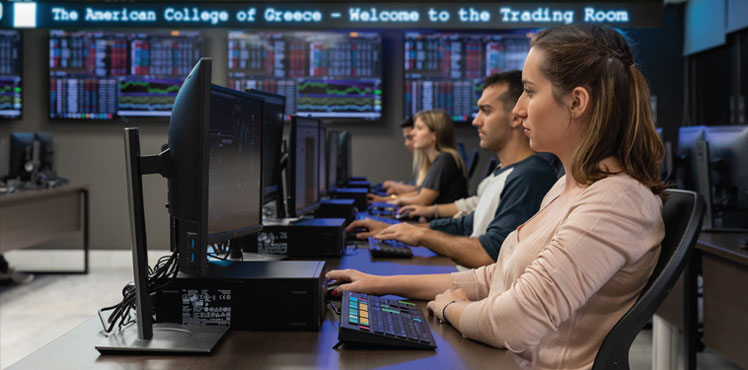
What is a Financial Trading Degree?
A financial trading degree is an academic program specifically designed to prepare students for careers in global financial markets, including stock trading, foreign exchange (forex), commodities, and derivatives markets. This degree integrates quantitative analysis, economic theory, portfolio management, and risk assessment with hands-on trading simulations and real-time financial data applications.
Graduates from such programs often pursue careers in investment banking, hedge funds, proprietary trading firms, asset management, or as independent traders. The curriculum emphasizes data-driven decision making, technical and fundamental analysis, and cutting-edge trading technologies.
Why Pursue a Degree in Financial Trading?
Financial markets are fast-paced, competitive, and constantly evolving. A formal financial trading education equips students with a deep understanding of how global markets operate, and how to make strategic decisions in real-time. Key benefits of pursuing a financial trading degree include:
- In-depth market knowledge
- Practical trading skills
- Advanced financial modeling techniques
- Access to industry-standard trading platforms
- Exposure to real-world case studies
- Professional networking opportunities
For aspiring traders, this degree acts as both a springboard into the financial industry and a shield against common rookie mistakes in trading.
Core Subjects Covered in a Financial Trading Degree
A well-structured financial trading degree typically covers a broad spectrum of subjects. Some of the most important modules include:
1. Financial Markets and Instruments
Understanding financial products such as equities, bonds, futures, options, and CFDs (Contracts for Difference) is crucial. This module dives into how these instruments are structured, traded, and priced in the global marketplace.
2. Technical Analysis and Charting Techniques
Students learn how to analyze price patterns, volume data, and momentum indicators to forecast market movements. This includes tools like:
- Moving Averages
- Relative Strength Index (RSI)
- MACD (Moving Average Convergence Divergence)
- Fibonacci Retracement Levels
- Candlestick Patterns
3. Fundamental Analysis
This involves the study of economic indicators, interest rate decisions, corporate earnings, and macroeconomic trends. Fundamental analysis helps traders understand the intrinsic value of assets and make informed long-term trading decisions.
4. Risk Management
Effective traders must know how to protect capital. This module teaches:
- Position sizing
- Stop-loss strategies
- Diversification
- Volatility measurement (e.g., VaR)
- Drawdown control
5. Algorithmic and Quantitative Trading
With the rise of AI and machine learning, this subject focuses on creating and testing automated trading strategies. Students get hands-on experience with:
- Python and R programming
- Backtesting tools
- Statistical arbitrage
- Market microstructure
6. Trading Psychology and Behavioral Finance
Understanding the psychological biases that affect decision-making is vital. This includes:
- Fear and greed cycles
- Overconfidence
- Loss aversion
- Herd behavior
- Cognitive dissonance
Types of Financial Trading Degrees Available
Bachelor’s Degree in Financial Trading
Usually a 3-4 year program, a bachelor’s degree introduces students to the core principles of finance and trading, with a focus on practical skills and internship opportunities. It’s an ideal choice for school-leavers aiming to enter the financial industry directly.
Master’s Degree in Trading and Financial Markets
A 1-2 year advanced program that goes deeper into derivatives, hedging strategies, and quantitative modeling. Designed for students who already have a foundation in finance or economics, this degree often includes live trading labs and industry mentorship.
Postgraduate Diplomas and Certificates
Shorter, more intensive programs that can be completed in a few months. These are ideal for working professionals looking to upskill or pivot into financial trading roles.
Online Trading Degrees and Courses
Flexible and accessible worldwide, these programs offer the same academic rigor as traditional degrees but allow students to study at their own pace. Many online degrees now feature real-time market simulators and live mentoring sessions.
Career Opportunities with a Financial Trading Degree
Graduates of financial trading degrees are well-positioned to enter various high-income financial sectors:
- Proprietary Trader
- Equity Analyst
- Forex Trader
- Commodities Broker
- Risk Manager
- Quantitative Analyst
- Portfolio Manager
- Crypto Asset Trader
- Trading Technology Developer
Some graduates also go on to start their own trading firms or become financial influencers on platforms like YouTube, Twitter, and Substack.
Top Universities Offering Financial Trading Degrees
Several prestigious institutions offer specialized programs in financial trading:
- University of Essex – MSc Financial Technology (FinTech)
- University of Reading – ICMA Centre – MSc Investment Management
- Cass Business School (Bayes) – MSc in Trading and Algorithmic Finance
- University of Glasgow – MSc Quantitative Finance
- University of Leeds – MSc Financial Risk Management
- London School of Economics (LSE) – Finance and Trading electives
Essential Skills You Will Develop
By the time you graduate, you will have mastered:
- Real-time market analysis
- Order execution strategies
- Financial modeling and forecasting
- Bloomberg Terminal and Reuters Eikon use
- Compliance and financial regulation knowledge
- Team collaboration and high-pressure decision-making
These skills are immediately applicable in both corporate trading floors and independent trading environments.
Accreditation and Industry Recognition
A strong financial trading degree should be recognized by or aligned with:
- Chartered Financial Analyst (CFA) Institute
- Global Association of Risk Professionals (GARP)
- Professional Risk Managers’ International Association (PRMIA)
- Financial Conduct Authority (FCA) standards
- MiFID II and Basel III frameworks
Accreditation ensures your education meets the highest industry standards and boosts your chances of global employability.
Is Financial Trading Right for You?
This field is best suited for individuals who are:
- Analytical thinkers
- Comfortable with high pressure
- Detail-oriented
- Emotionally resilient
- Passionate about markets
- Eager to continuously learn and adapt
If you are looking for a career that combines strategic thinking, technology, and global impact, financial trading could be your path.
Conclusion
A financial trading degree offers a structured, immersive, and strategic gateway into one of the most dynamic and rewarding sectors of the global economy. Whether your goal is to join a top-tier investment firm, start your own trading desk, or leverage algorithmic systems to trade from anywhere, this degree provides the skills, knowledge, and credibility to thrive.